
Legal Disclaimer: This article represents an analytical review and professional critique of the public performance of certain advocacy groups in Ireland. We do not issue personal accusations; rather, we raise legitimate questions of public interest regarding the asylum seeker community based on chronological facts and public stances. This is protected under the right to fair comment and freedom of expression.
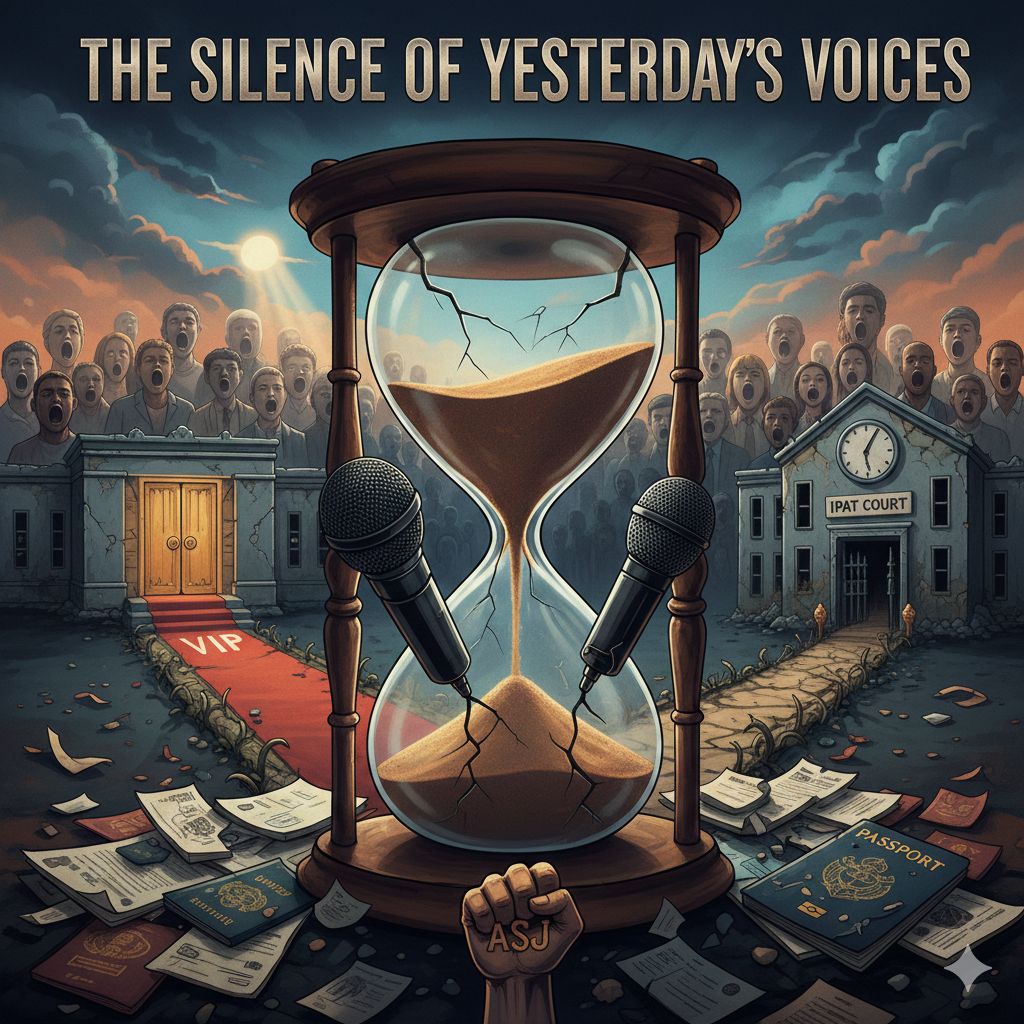
Do you remember the MASI movement? The voice that once filled the air with slogans of justice, freedom, and dignity? Today, as asylum seekers face unprecedented systemic challenges and policy shifts, a question is being asked across accommodation centers: Why has the voice of those who claimed to be “the voice of the voiceless” fallen so silent?*
⏳ A Shift in Momentum: Analyzing the Timeline
When looking at the movement’s trajectory, a chronological paradox emerges that warrants public discussion:
- The Golden Era (Pre-2021):** MASI was at the forefront of every protest, issuing daily statements and fiercely challenging the Direct Provision system across all media platforms.
- The Post-Regularisation Phase (Post-2021): Observers have noted a dramatic decline in the movement’s grassroots and protest momentum, coinciding with the launch of the government’s Regularisation Scheme.
This timing opens the door for a legitimate human rights inquiry: Has the movement’s momentum and its willingness to confront the state been impacted since some of its leadership secured legal stability (Stamp 4)?** Has the priority shifted from radical grassroots action to participating in official dialogue channels that no longer resonate with the urgent suffering of people on the ground?
🎭 “Soft Advocacy” and the Challenge of Urgent Cases
While asylum seekers today face major hurdles regarding the functionality of the International Protection Appeals Tribunal (IPAT) and increasing reports of administrative flaws affecting hundreds of cases, there is an unexplained absence of the names that once led the struggle.
Instead of direct pressure to reform the “economic interests” linked to the accommodation industry, we see a trend toward “soft advocacy”—participating in symbolic workshops and seminars (such as CV building) organized by funded entities. Meanwhile, core issues like the 22-day hunger strike or the urgent needs of those in the system for years have seen a lack of visible solidarity or public campaigning from these platforms.
🔨 ASJ Ireland: A Call for Transparency and Collective Responsibility
At Asylum Seekers for Justice (ASJ), we do not question individual motives; we question operational effectiveness. Every asylum seeker still facing the threat of deportation or administrative limbo has the right to ask:
- Why was MASI absent in supporting hunger strikers during their most critical moments?
- Where is the firm stance regarding the repeated criticisms of IPAT’s performance found in recent human rights reports?
- Have diplomatic channels with the government become more important than standing in the streets with those in actual distress?
⚖️ Conclusion: Principles Do Not End with Stamp 4
Advocating for human rights is not a “temporary phase” that ends once personal circumstances improve. It is a continuous moral commitment. If a movement is not present during the darkest hours of the community it claims to represent, its status as a “movement of asylum seekers” becomes a question of credibility for those still suffering.
We at ASJ remain in the field. We ask the difficult questions and highlight the truths that others prefer to ignore. Truth does not require funding, and dignity cannot be purchased with silence.
⚖️ Right of reply guaranteed:
Because we believe in transparency, we announce that our page and platform are open to MASI movement leaders to respond to these questions and clarify their position on the urgent issues currently affecting asylum seekers. The public expects answers, not just empty slogans.